
Rabbit Care Tips : What Is Obesity in Rabbits?
Obesity in rabbits occurs when excess body fat builds up due to an imbalance between calorie intake and energy expenditure. This usually happens when rabbits eat too much and move too little.
Overweight rabbits often have visible fat deposits around their bellies, under the chin (called a dewlap), and around their armpits. Excess fat also builds up around internal organs, increasing the risk of long-term health issues.
Because of their weight, obese rabbits often struggle to groom themselves properly. This can lead to dirty fur, skin irritation, and even infections.
Worse still, obesity can cause low-grade inflammation, which may lead to arthritis, gastrointestinal stasis, pododermatitis (foot inflammation), liver disease, heart problems, and urinary issues.
Common Symptoms of Obesity in Rabbits
If your rabbit is overweight, you might notice:
- Less energy or reduced activity
- Fat accumulation around the belly, chin, and armpits
- Skin fold irritation or inflammation
- Dirty or matted fur (especially around the hindquarters)
- Difficulty moving, hopping, or cleaning itself
- Signs of gastrointestinal issues
- Pododermatitis (sore feet)
If your rabbit stops eating, produces abnormal stool, or shows difficulty breathing, seek veterinary care immediately.
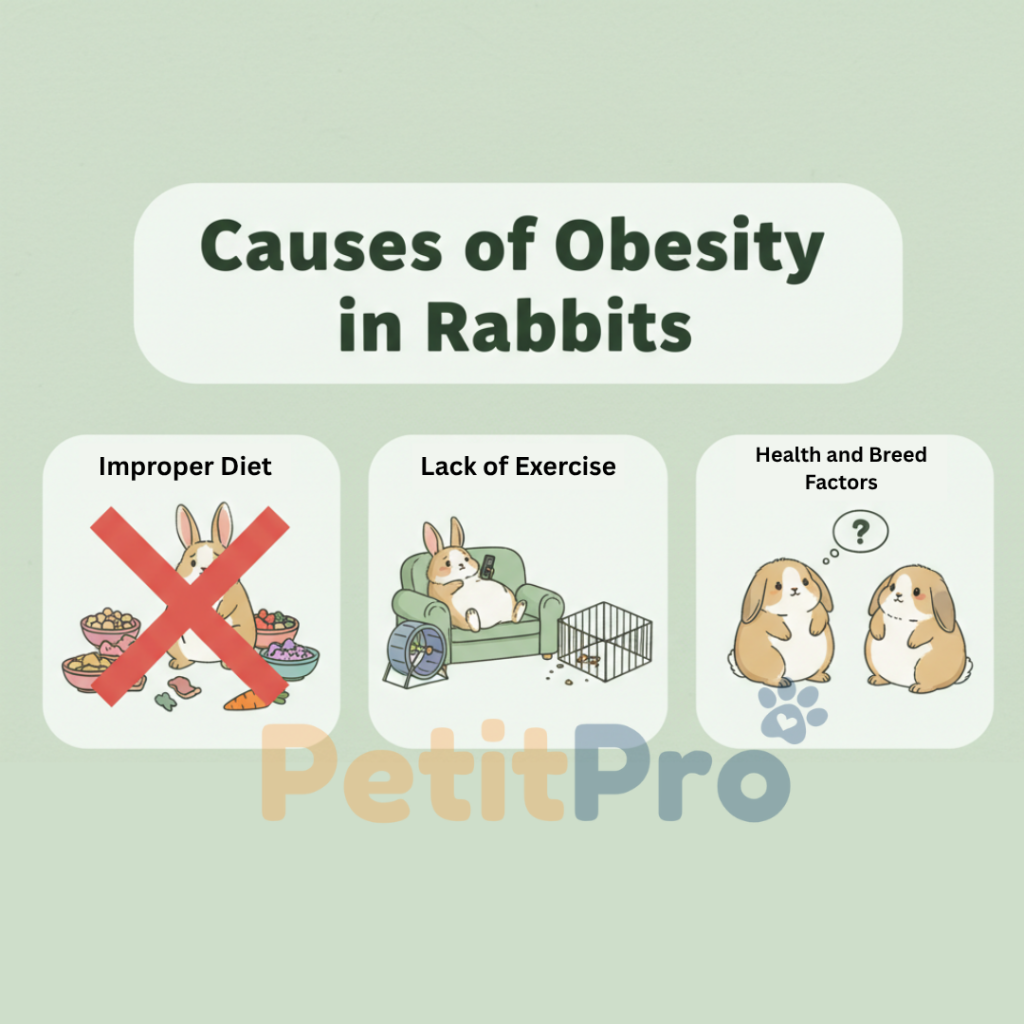
Causes of Obesity in Rabbits
Several factors can contribute to obesity in rabbits, including:
1. Improper Diet
A diet high in pellets, sugary treats, or fruits like apples and carrots can cause rapid weight gain. Rabbits need more fiber, not sugar.
2. Lack of Exercise
Rabbits confined to small cages without daily hopping or playtime are more likely to gain weight.
3. Health and Breed Factors
Certain breeds, like dwarf and Flemish Giant rabbits, are naturally more prone to obesity. Middle-aged rabbits (4–5 years) also tend to gain weight more easily.
Hormonal changes after neutering or spaying can affect metabolism too, making weight control more important.
How Veterinarians Diagnose Obesity
Your vet will assess your rabbit’s body condition score by feeling the ribs, spine, and pelvis, checking for fat layers and muscle tone.
Additional tests may include:
- Blood tests (CBC & Chemistry Panel): To check for organ health or infection.
- X-rays: To detect arthritis or internal fat buildup.
Tip: Never fast your rabbit before these tests — rabbits must always have access to hay and water to maintain healthy digestion.
Tips on Helping Your Rabbit Lose Weight
The key to managing obesity is a balanced diet and regular exercise, under your vet’s supervision.
1. Diet Adjustments
- Gradually reduce pellet portions and avoid cereal mixes.
- Provide unlimited hay (especially first-cut Timothy hay).
- Offer a small, daily portion of fresh leafy greens.
- Limit fruits or sugary treats to once a week.
2. Increase Physical Activity
- Let your rabbit explore in a safe area daily.
- Add toys, tunnels, and puzzles to stimulate movement and curiosity.
- Create play sessions for at least 1–2 hours per day.
Weight loss should happen gradually over weeks or months to avoid digestive upset.
Recovery and Weight Management
Once your rabbit reaches a healthy weight:
- Maintain the same diet and exercise routine.
- Weigh your rabbit weekly using a pet scale.
- Record their weight trends to prevent relapse.
- Continue regular vet check-ups to ensure long-term health.
Consistency is key — even small dietary “cheats” can cause weight to return.
Preventing Obesity in Rabbits
To prevent obesity:
- Provide high-quality hay (Timothy, orchard, meadow, or oat hay).
- Limit pellets to ¼–½ cup per 2–2.5 kg of your rabbit’s body weight daily.
- Offer fresh leafy greens daily (about the size of their head).
- Keep treats and fruits for special occasions only.
- Encourage daily play and hopping in a secure space.
- Schedule vet check-ups every 6–12 months.
By maintaining a proper diet and active lifestyle, you can help your rabbit live a longer, happier life.
Rabbit Obesity FAQs
Q: How do you treat obesity in rabbits?
A combination of a controlled diet and more exercise, guided by a veterinarian.
Q: What is the obesity scale for rabbits?
Vets typically use a 1–5 body condition scale, though it’s subjective and should be used as a general guide.
Q: Why is my rabbit getting fat?
Too many calories and too little movement are the usual causes, but health conditions can contribute too.
Q: What happens to obese rabbits?
They’re at higher risk of arthritis, liver and heart disease, and other complications from chronic inflammation.
Keep Your Rabbit Healthy and Happy with Professional Grooming in Penang!
Regular grooming not only keeps your rabbit clean and comfortable but also helps detect early signs of weight-related problems like skin irritation or fur soiling.
At PetitPro, our professional rabbit grooming service provides gentle care, coat maintenance, and stress-free sessions designed for your rabbit’s comfort.
✨ Book your rabbit grooming appointment in Penang today — and give your rabbit the healthy, happy life it deserves!
Book Grooming Slot Now